Top 10 chicken breeds to hatch in the UK
Chicken eggs take 21 days to hatch. These ten are breeds UK keepers come back to again and again: tinted eggs from a Light Sussex, sky blue from a Cream Legbar, chocolate brown from a Marans, and a silk-feathered hen that would rather sit on eggs than lay them.
- Light Sussex
- Rhode Island Red
- Buff Orpington
- Pekin Bantam
- Silkie
- Cream Legbar
- Copper Black Marans
- Welsummer
- Wyandotte
- Brahma
All ten hatch in 21 days.
| Breed | Egg colour | Eggs a year | Temperament |
|---|---|---|---|
| Light Sussex | Tinted to light brown | 180-250 | Docile and friendly |
| Rhode Island Red | Brown | 180-300 | Hardy; some males aggressive |
| Buff Orpington | Light brown | 90-180 | Very placid |
| Pekin Bantam | White or cream | Few; about 80 | Quiet and docile |
| Silkie | White to light brown | 80-120 | Gentle; very broody |
| Cream Legbar | Blue | 180-200 | Active and friendly |
| Copper Black Marans | Mahogany to chocolate | 170-200 | Gentle and hardy |
| Welsummer | Deep red-brown, speckled | 160-180 | Calm and active |
| Wyandotte | Brown | About 180 | Calm and docile |
| Brahma | Brown | 140-200 | Calm, not flighty |
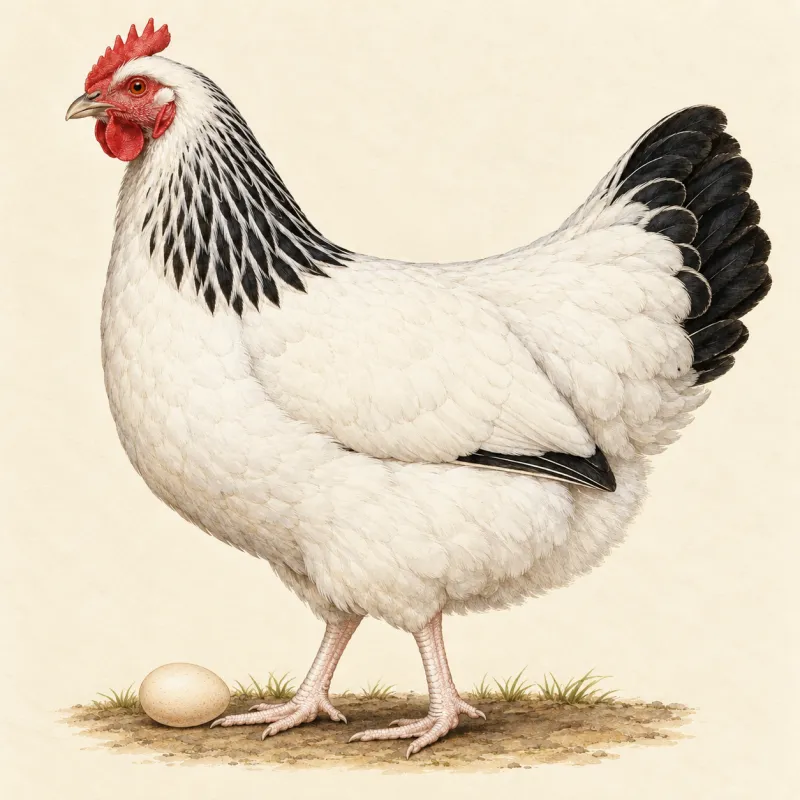
1 Light Sussex
The favourite colour of an old English breed: a docile white hen with a black-striped neck and tinted eggs.
Item specifics: Light Sussex
- Egg colour
- Tinted to light brown
- Eggs a year
- 180-250, some light strains more
- Days to hatch
- 21
- Size
- Large fowl and bantam; large hens about 3.2 kg, males about 4.1 kg
- From
- Sussex, Kent and Surrey, England
- Temperament
- Docile, gentle, friendly and alert
- UK status
- RBST priority breed (2026-27 watchlist)
Why keepers love it: Light Sussex
White body, black-striped neck, black tail: the Light Sussex is the most popular colour of a very old English breed, one that was already on the classification at the first poultry show in 1845. The Rare Breeds Survival Trust (RBST) rates the Sussex docile, gentle and friendly, and a good choice for a beginner. Published laying figures run from about 180 to 250 tinted eggs a year, and some strains of lights lay more than 250.
Hatching: Light Sussex
Sussex hens go broody and make good mothers, so a Light Sussex can hatch and rear her own clutch. The variety also has a place in hatching history. When sex-linked breeding was in fashion, Light Sussex hens were in demand for mating to gold males such as the Rhode Island Red. In crosses of that kind the cockerel chicks hatch white and the pullets buff or red.
Keeping: Light Sussex
Sussex prefer free range but cope with confinement, and they are not prone to flying. Large fowl hens weigh about 3.2 kg, and the bantam is now more numerous than the large fowl. They winter well but dislike heat. Two cautions: the breed fattens easily and lays best when kept lean, and some exhibition strains are poor layers, so the strain matters as much as the breed.
Checked against: The Poultry Club of Great Britain (Sussex, Rhode Island Red), Rare Breeds Survival Trust (Sussex, Watchlist: chickens), The Livestock Conservancy, University of Wisconsin-Madison Division of Extension, Wikipedia, Small and Backyard Poultry (Extension Foundation), University of Illinois Extension.
Look for Light Sussex hatching eggs on Broody Back to the ten chickens
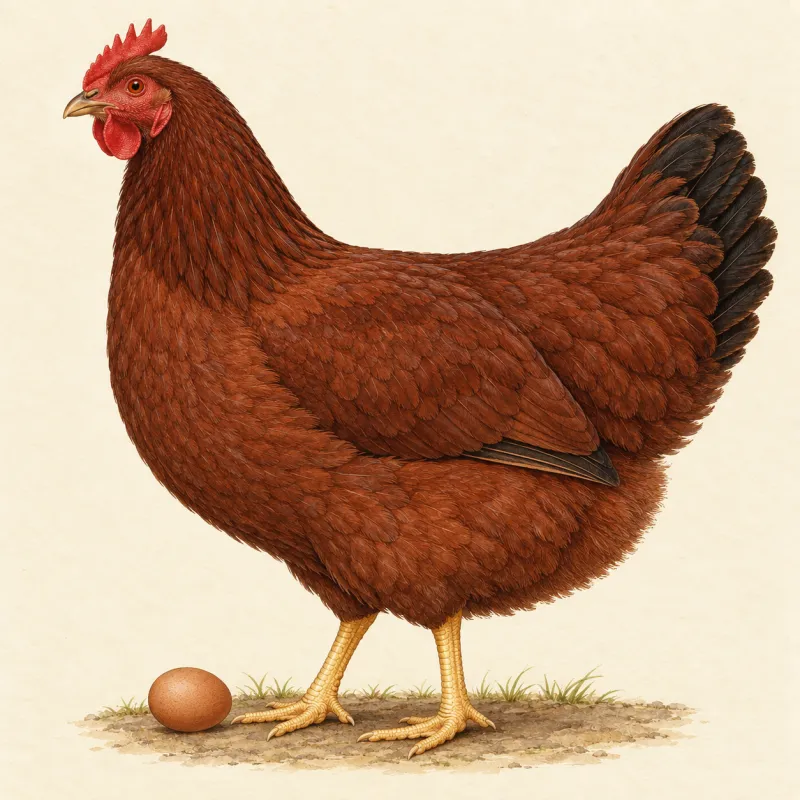
2 Rhode Island Red
The dark red American farm hen: hardy, tolerant of rough conditions and a heavy layer of brown eggs.
Item specifics: Rhode Island Red
- Egg colour
- Brown
- Eggs a year
- 180-300, depending on strain
- Days to hatch
- 21
- Size
- Large fowl and bantam; large hens about 3 kg, males about 3.9 kg
- From
- Rhode Island and Massachusetts, USA
- Temperament
- Hardy; hens mostly peaceful, some males aggressive
- UK status
- One of the most popular breeds in Britain; not on the RBST watchlist
Why keepers love it: Rhode Island Red
The Poultry Club credits the Rhode Island Red with spreading across the world faster than any other breed, and Britain has had a club for it since 1909. Bred on New England farms from Malay, Java, Shanghai and brown Leghorn stock, it is rated perhaps the best layer of all the dual-purpose breeds. Hens can lay 200 to 300 brown eggs a year, starting as early as six months, and keep producing in marginal conditions.
Hatching: Rhode Island Red
Day-old Rhode Island Reds give a clue to their sex: cockerel chicks have a white spot in the down over the wing web, though the spot varies in size and the method is not always accurate. Most Reds will go broody, less so in strains selected hard for egg numbers. A Red male over silver or barred hens gives chicks that can be sexed at hatch.
Keeping: Rhode Island Red
Reds are hardy and like to range. Standard hens weigh about 3 kg and males about 3.9 kg. The drawback is the males: more than one source warns that some become aggressive, although most hens are peaceful. Strains bred for egg numbers since the 1940s are smaller, paler and less broody than the old dark type, and the rich red fades after long exposure to sun.
Checked against: The Poultry Club of Great Britain, The Livestock Conservancy, University of Wisconsin-Madison Division of Extension, Small and Backyard Poultry (Extension Foundation), Wikipedia, Bund Deutscher Rassegeflügelzüchter (the German poultry federation), University of Illinois Extension, Rare Breeds Survival Trust.
Look for Rhode Island Red hatching eggs on Broody Back to the ten chickens
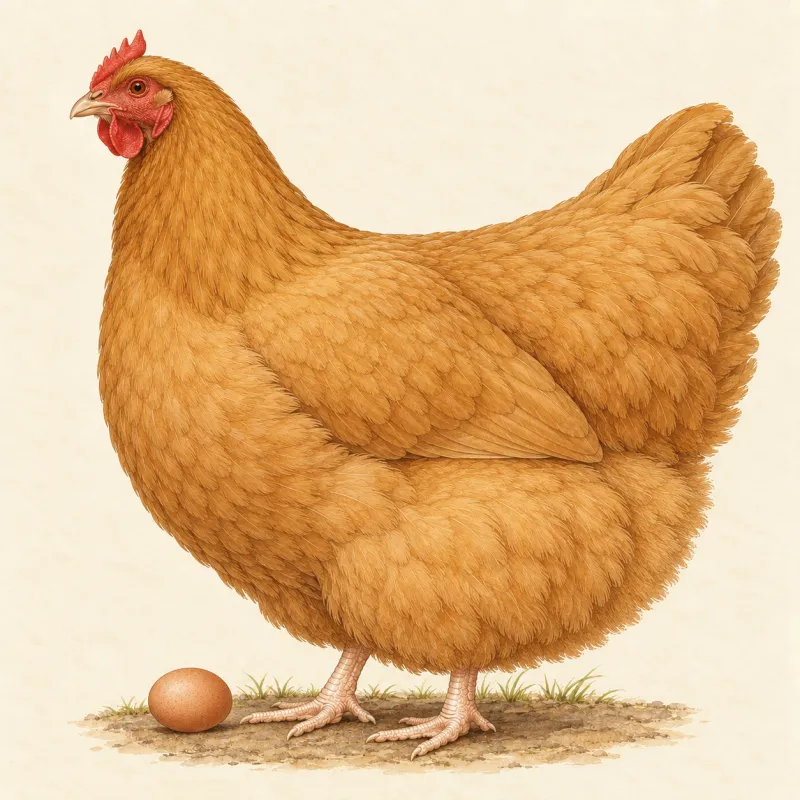
3 Buff Orpington
A big, buff, placid hen from Kent that tolerates handling and makes a good mother.
Item specifics: Buff Orpington
- Egg colour
- Light brown
- Eggs a year
- 90-180, depending on strain
- Days to hatch
- 21
- Size
- Large fowl and bantam; large hens at least 3.6 kg, males at least 4.5 kg
- From
- Orpington, Kent, England
- Temperament
- Very placid, friendly and docile
- UK status
- RBST priority breed (2026-27 watchlist)
Why keepers love it: Buff Orpington
William Cook launched the Buff in 1894, eight years after his original black Orpington, and it proved even more popular than the Black. The appeal has not changed: a massive, loosely feathered bird, with hens of at least 3.6 kg by the club standard, and a very placid, friendly nature that tolerates handling. The Rare Breeds Survival Trust (RBST) calls Orpingtons one of the best birds for a first-time keeper and for families with children. Much of the apparent size is feather.
Hatching: Buff Orpington
Orpington hens go broody and generally make good mothers. In a mixed brooder the chicks are not pushy, and are often the underdogs when several breeds are reared together. Supply of hatching eggs is modest: the RBST gives 90 to 175 light brown eggs a year, depending on strain. There is a bantam Buff too, first imported from Germany in 1900.
Keeping: Buff Orpington
Orpingtons are at home on free range or in a run, and thick feathering carries them through cold weather. Rain is the problem: soft plumage gets waterlogged, so they need shelter in the wet. A three-foot fence is often enough. Larger nest boxes than normal help, and such placid birds can be bullied in a mixed flock. Show breeding has cost the Orpington much of its laying ability.
Checked against: The Poultry Club of Great Britain, The Orpington Club (History of the Orpington, The Orpington Breed Standards), Rare Breeds Survival Trust (Buff Orpington, Watchlist: chickens), University of Wisconsin-Madison Division of Extension, Wikipedia, Bund Deutscher Rassegeflügelzüchter (the German poultry federation), University of Illinois Extension.
Look for Buff Orpington hatching eggs on Broody Back to the ten chickens
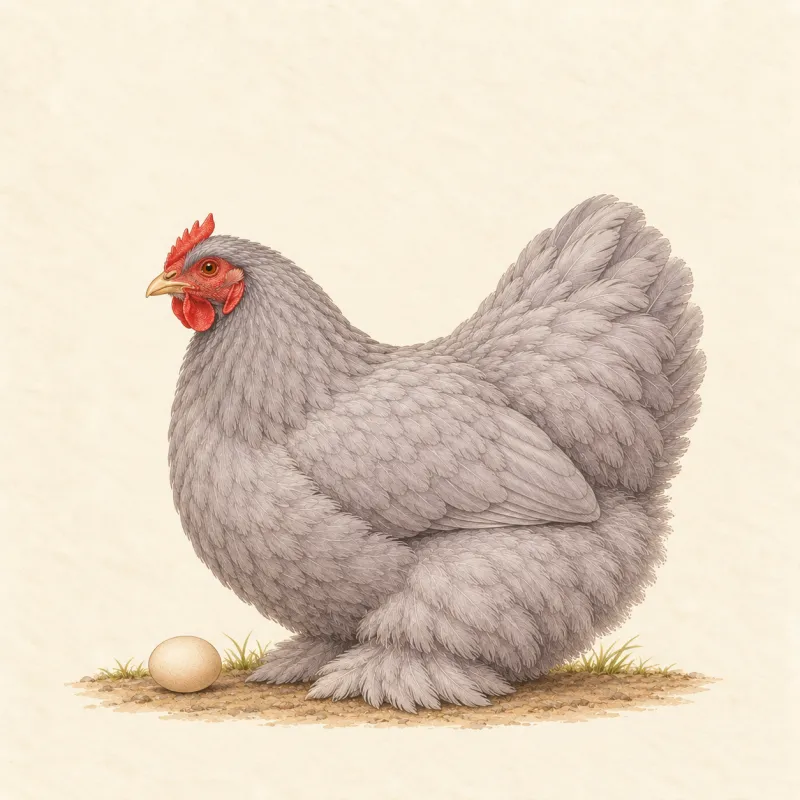
4 Pekin Bantam
A feather-footed true bantam under 700 g: quiet, docile, easy to handle and a determined sitter.
Item specifics: Pekin Bantam
- Egg colour
- White or cream
- Eggs a year
- Few; about 80 (German figure for the bantam Cochin)
- Days to hatch
- 21
- Size
- True bantam only; males up to 680 g, hens up to 570 g
- From
- China; in Britain since the mid-1800s
- Temperament
- Quiet, docile and easy to handle
- UK status
- Popular garden and show bantam; not on the RBST watchlist
Why keepers love it: Pekin Bantam
Pekins are true bantams. The Poultry Club calls the Pekin a genuine bantam breed with no real relationship to the large Cochin, although North Americans call it the Cochin bantam. Imported from China in the middle of the nineteenth century, it is now a popular garden pet. Males weigh no more than 680 g, legs and feet are heavily feathered, and the breed club secretary describes the birds as quiet, docile and easy to handle.
Hatching: Pekin Bantam
Pekins are natural incubators. The hens make good sitters and attentive mothers, and an American university guide describes bantam Cochins, the North American name for the Pekin, as persistent setters that are often used as foster mothers for other bantams and game birds. A bantam hen covers eight to eleven eggs. Vent feathers on both sexes may need trimming for good fertility.
Keeping: Pekin Bantam
The feathering that makes a Pekin is also its weak point. Low to the ground, with heavily feathered feet, the birds are miserable in cold, wet weather and are best housed from late autumn to early spring, off wet grass and mud. They tolerate confinement and scratch little, so a small garden suits them. Check for mites and lice. Eggs are small, white or cream, and few.
Checked against: The Poultry Club of Great Britain, University of Wisconsin-Madison Division of Extension, Smallholder magazine (South West Farmer), Wikipedia, Bund Deutscher Rassegeflügelzüchter (the German poultry federation), Rare Breeds Survival Trust.
Look for Pekin Bantam hatching eggs on Broody Back to the ten chickens
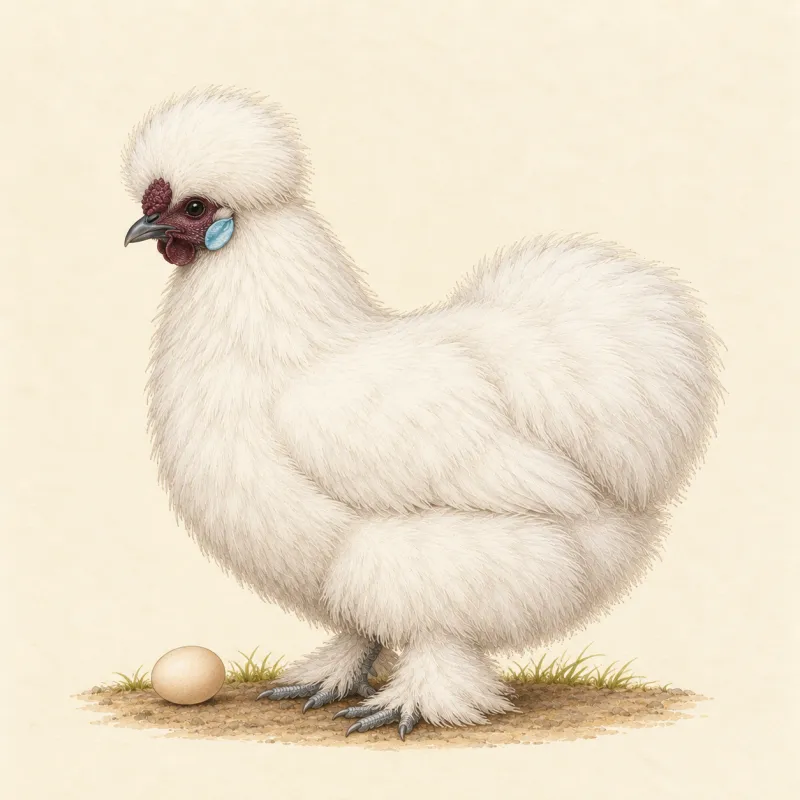
5 Silkie
Fur-like feathers, black skin, five toes and an unsurpassed urge to sit on eggs.
Item specifics: Silkie
- Egg colour
- White to light brown
- Eggs a year
- About 80-120
- Days to hatch
- 21
- Size
- Large fowl (males 1.4-1.8 kg) and bantam (males about 600 g)
- From
- Asia; China is the best documented, and India and Japan are also suggested
- Temperament
- Gentle and docile; persistently broody
- UK status
- Standardised by the Poultry Club as a light breed; not on the RBST watchlist
Why keepers love it: Silkie
The Silkie is the odd one out among chickens. Its feathers lack the tiny hooks that hold a normal feather together, so the plumage looks like fur or silk. Underneath are black skin and bones, there are five toes on each foot instead of the usual four, and the legs are feathered. The Poultry Club classes it as a light breed, it comes in large fowl and bantam sizes, and its gentle, docile nature makes it a popular pet.
Hatching: Silkie
Persistent broodiness is part of the Poultry Club description of the breed. Keepers use Silkie hens to hatch other poultry and game birds, and a hen may go broody with no eggs under her at all. In China, researchers report Silkie hens going broody after every 10 to 12 eggs. One catch for breeders: Silkies are difficult to sex, because the feather structure hides the usual differences.
Keeping: Silkie
Silkies cannot fly, and like all feather-legged breeds they should be kept off wet grass and mud. Large fowl males weigh between 1.4 and 1.8 kg, bantam males about 600 g. Expect few eggs, white to light brown and not large, because a sitting hen is not laying. The German federation's breed tables give 80 a year for large fowl and 120 for bantams.
Checked against: The Poultry Club of Great Britain, American Silkie Bantam Club, University of Wisconsin-Madison Division of Extension, Small and Backyard Poultry (Extension Foundation) (Sexing Day-Old Chicks, Selecting a chicken breed for small or backyard poultry flocks), BMC Genomics (2024), Wikipedia, Bund Deutscher Rassegeflügelzüchter (the German poultry federation) (Rassetafeln Hühner (breed tables, large fowl), Rassetafeln Zwerghühner (breed tables, bantams)), Rare Breeds Survival Trust.
Look for Silkie hatching eggs on Broody Back to the ten chickens
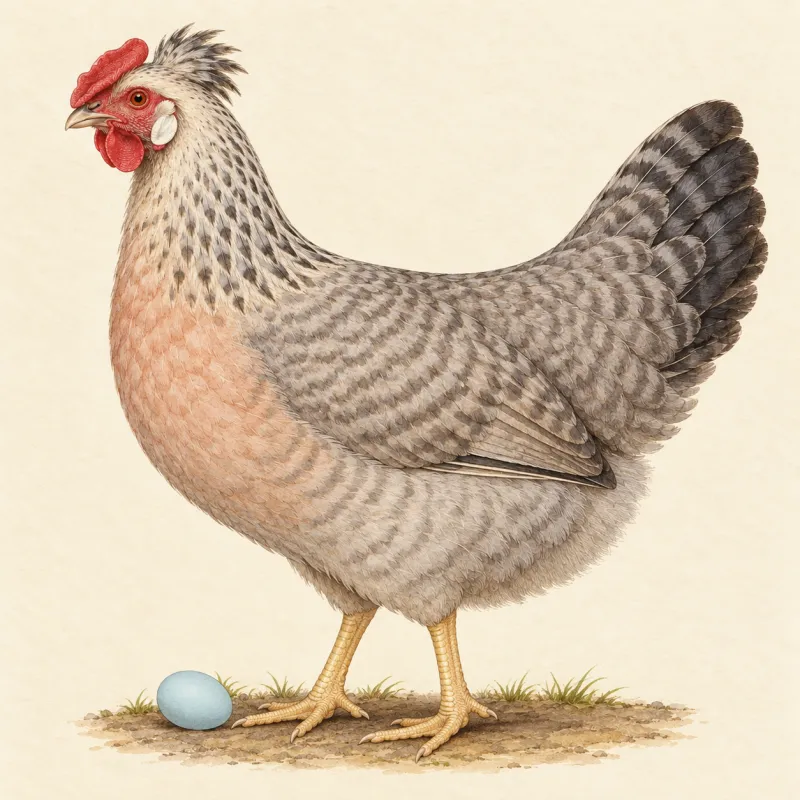
6 Cream Legbar
The Cambridge-bred blue-egg layer whose chicks show their sex in their down on hatch day.
Item specifics: Cream Legbar
- Egg colour
- Blue, sometimes green or olive
- Eggs a year
- 180-200
- Days to hatch
- 21
- Size
- Large fowl; males 2.7-3.4 kg, hens 2-2.7 kg
- From
- Cambridge, England
- Temperament
- Hardy, active and friendly; rarely broody
- UK status
- RBST priority breed (2026-27 watchlist)
Why keepers love it: Cream Legbar
Bred at Cambridge, the Cream Legbar offers two things few breeds can: blue eggs, and chicks that can be sexed by eye at hatch. It arose by accident, when cream birds bred by Michael Pease were mated with blue-egg Araucanas kept by Professor Punnett. Standardised in 1958, it nearly died out in the 1970s because nobody wanted blue eggs. The birds are crested, and hens lay around 180 to 200 eggs a year.
Hatching: Cream Legbar
Hatch day does the sorting. Pullet chicks have distinct dark and light stripes down the body, while cockerels are lighter all over with a yellow spot on the head. Behind it is a sex-linked barring gene, carried in double dose by males. The blue-egg gene is dominant, so crosses with other breeds still lay coloured eggs. Hens rarely go broody, so most keepers will need an incubator.
Keeping: Cream Legbar
Hardy, active and a frugal eater, the Cream Legbar forages well on free range and adapts to a run, though the related Legbar is described as flighty. Hens weigh 2 to 2.7 kg. Egg colour varies with strain from blue to green or olive. The Rare Breeds Survival Trust warns that many so-called Cream Legbars no longer meet the standard because they have lost the dilute cream gene.
Checked against: The Poultry Club of Great Britain, Rare Breeds Survival Trust (Cream Legbar, Legbar, Watchlist: chickens), Cream Legbar Club (USA) (Legbar Breed Overview, Cream Legbar standard of perfection), PLOS Genetics (2013), Wikipedia (Auto-sexing, Legbar), Small and Backyard Poultry (Extension Foundation), University of Illinois Extension.
Look for Cream Legbar hatching eggs on Broody Back to the ten chickens
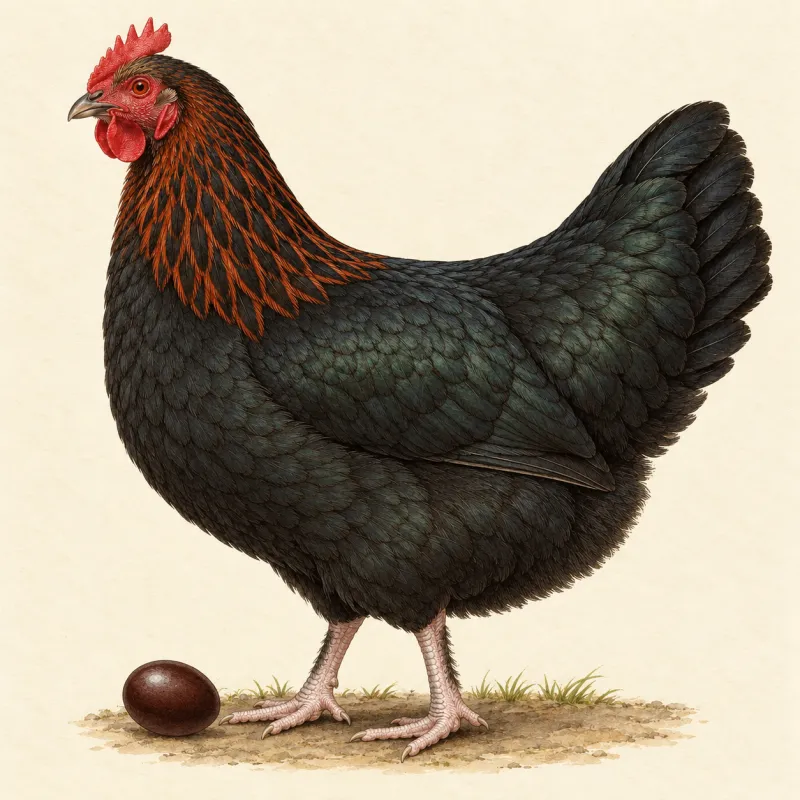
7 Copper Black Marans
A black hen with a copper-red neck, kept for some of the darkest eggs any hen lays: mahogany to chocolate.
Item specifics: Copper Black Marans
- Egg colour
- Very dark red-brown, mahogany to chocolate
- Eggs a year
- About 170-200
- Days to hatch
- 21
- Size
- Large fowl and bantam; hens 2.6-3.2 kg, males 3.5-4 kg
- From
- Marans, on the Atlantic coast of France
- Temperament
- Gentle, mild and hardy; will go broody
- UK status
- Standardised in Britain as a heavy breed; not on the RBST watchlist
Why keepers love it: Copper Black Marans
People keep Marans for the egg. The French breed club calls it the darkest of all hen eggs, a deep red-brown that it grades on a colour scale from 1 to 9. In the Copper Black, the hen is black with red hackle markings and the male has copper lancets in his neck and back. Unlike the clean-legged English Marans, this colour follows the French type, with lightly feathered shanks. Adult hens lay big eggs of 70 to 80 g.
Hatching: Copper Black Marans
The shell that makes the egg special also makes it harder to hatch, as the French club admits. It is thicker and less porous than normal, which the club links to hatchability 5 to 10 per cent below most breeds. Dark eggs are also harder to candle than pale ones. The colour is a coating, laid on in the last 10 cm of the oviduct just before laying.
Keeping: Copper Black Marans
The Marans Club describes its birds as gentle, mild natured and hardy, and suitable for beginners, though cockerels can fight other males. Hens weigh around 3 kg. Laying is moderate: the German federation's breed table gives 170 eggs a year, and French selection flocks of the 1950s averaged 168, later nearing 200. The Poultry Club calls the Marans a sitting breed, so expect some broodiness. Feathered shanks need dry ground.
Checked against: The Poultry Club of Great Britain, The Marans Club (French Standard Marans, Why keep Marans?, English Standard Maran), Marans-Club de France (The extra-russet-red egg of the Marans, The origins of the Marans), University of Wisconsin-Madison Division of Extension (Chicken Breeds and Varieties (A2880), Bantams (North Central Regional Extension Publication 209)), Wikipedia, Texas A&M AgriLife Extension, Bund Deutscher Rassegeflügelzüchter (the German poultry federation), University of Illinois Extension, Rare Breeds Survival Trust.
Look for Copper Black Marans hatching eggs on Broody Back to the ten chickens
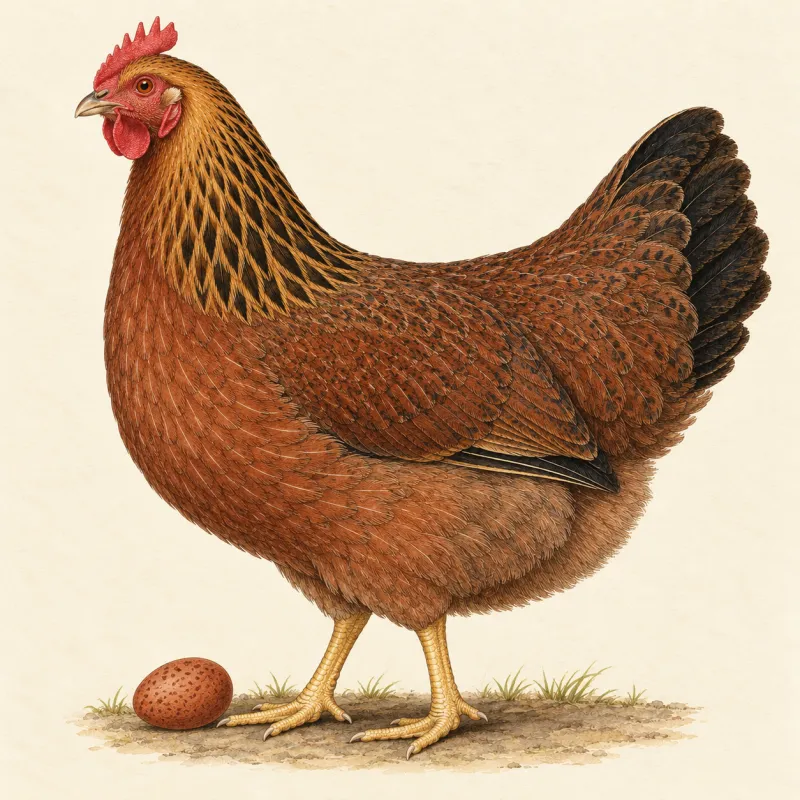
8 Welsummer
A Dutch layer in partridge colours whose large, deep red-brown eggs often come speckled.
Item specifics: Welsummer
- Egg colour
- Deep red-brown, often speckled
- Eggs a year
- 160-180
- Days to hatch
- 21
- Size
- Large fowl and bantam; large hens about 2.7 kg, males about 3.2 kg
- From
- Welsum, the Netherlands
- Temperament
- Upright, alert and active; calm; not broody
- UK status
- In Britain since 1928, breed club since 1930; not on the RBST watchlist
Why keepers love it: Welsummer
The Welsummer was built around an egg. Farm flocks near the Dutch village of Welsum laid large dark brown eggs before the breed was standardised, and stock came to Britain in 1928 for exactly that. The club standard asks for a rich, deep red-brown shell, matt for preference, and some eggs are speckled or mottled. Large fowl eggs over 85 g are not uncommon. The hen is partridge coloured, the male red-brown with a black breast mottled with red.
Hatching: Welsummer
Welsummers are not sitters. The Dutch club counts the absence of broodiness among the qualities of the breed, so hatching means an incubator or a borrowed broody. The British club egg standard marks down anything that interferes with hatchability, and dark or speckled shells are harder to candle than pale ones. For sexing at hatch, breeders crossed in Barred Plymouth Rock to create an autosexing breed, the Welbar.
Keeping: Welsummer
Classed as a light breed in Britain despite a good body size, the Welsummer is upright, alert and active, and the Dutch club describes its character as calm. It likes free range but does well in a closed run. Hens weigh about 2.7 kg and have clean yellow legs. The Dutch club puts laying at about 180 eggs a year and the German federation's breed table at 160.
Checked against: The Poultry Club of Great Britain, The Welsummer Club (The Welsummer Breed Standard, Home page), Welsumerclub (Netherlands) (De Welsumer, Geschiedenis (history)), Rare Breeds Survival Trust (Welbar, Watchlist: chickens), University of Wisconsin-Madison Division of Extension, Texas A&M AgriLife Extension, Bund Deutscher Rassegeflügelzüchter (the German poultry federation), University of Illinois Extension.
Look for Welsummer hatching eggs on Broody Back to the ten chickens
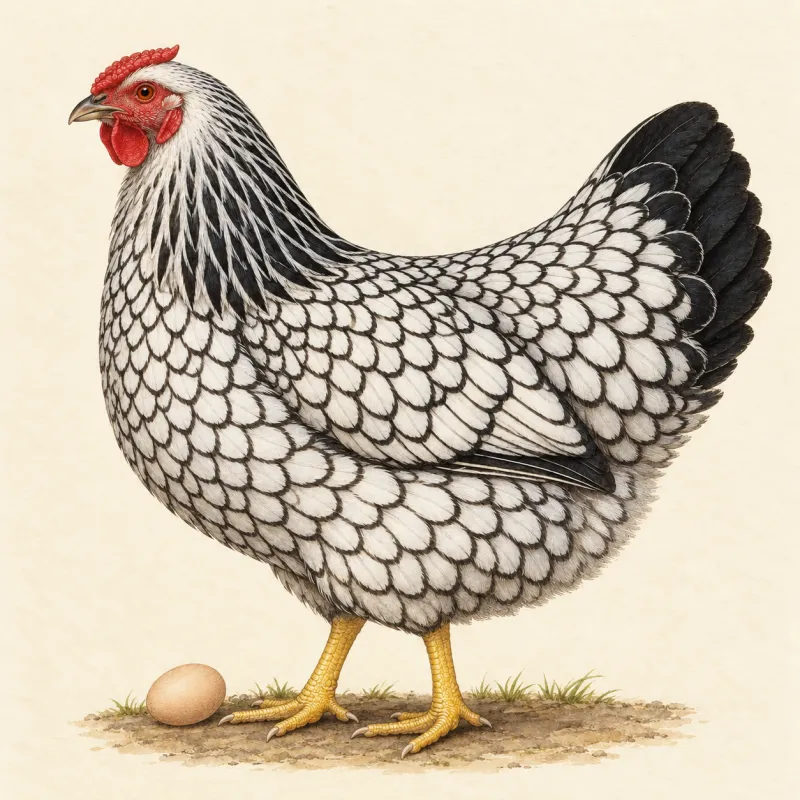
9 Wyandotte
A rounded, rose-combed American breed in many colours, led by the black-laced Silver Laced.
Item specifics: Wyandotte
- Egg colour
- Brown, from light to dark depending on colour variety
- Eggs a year
- About 180; bantams about 160
- Days to hatch
- 21
- Size
- Large fowl and bantam; large hens from 3.17 kg, males from 4.08 kg
- From
- United States
- Temperament
- Friendly, calm and docile
- UK status
- In Britain since the 1880s; not on the RBST watchlist
Why keepers love it: Wyandotte
The Silver Laced came first: white feathers, each with well-defined black lacing, standardised in America in 1883 and brought to England at about the same time, where breeders set about perfecting the pattern. Most later colours were made by crossing, though the white arose as a sport, and British Poultry Standards lists fourteen. Under the pattern is a practical bird, dual purpose and docile, with a rose comb that does not freeze as easily as a single comb.
Hatching: Wyandotte
Wyandotte hens make good mothers. The caveats come from a University of Wisconsin guide, which lists relatively poor hatches among the common faults of the breed and notes that rose-combed parents sometimes produce single-combed chicks, which should not be kept as breeders. Laced birds are demanding to breed for show: a classic guide reproduced by the breed club recommends breeding exhibition cockerels and pullets from separate pens.
Keeping: Wyandotte
Friendly, calm and cold-hardy, Wyandottes are poor flyers and suit a small family flock. The British club standard sets hens at not less than 3.17 kg and males at 4.08 kg, and there is a bantam, with hens under 1.4 kg, for small spaces. Eggs are brown, lighter in some colours, and the German federation's breed table gives about 180 a year. Legs are yellow and free of feathers.
Checked against: The Poultry Club of Great Britain, The Laced Wyandotte Club (Breed Standard, Silver Laced, Double Mating), The Livestock Conservancy, University of Wisconsin-Madison Division of Extension, Wikipedia, Bund Deutscher Rassegeflügelzüchter (the German poultry federation) (Rassetafeln Hühner (breed tables, large fowl), Rassetafeln Zwerghühner (breed tables, bantams)), University of Illinois Extension, Rare Breeds Survival Trust.
Look for Wyandotte hatching eggs on Broody Back to the ten chickens
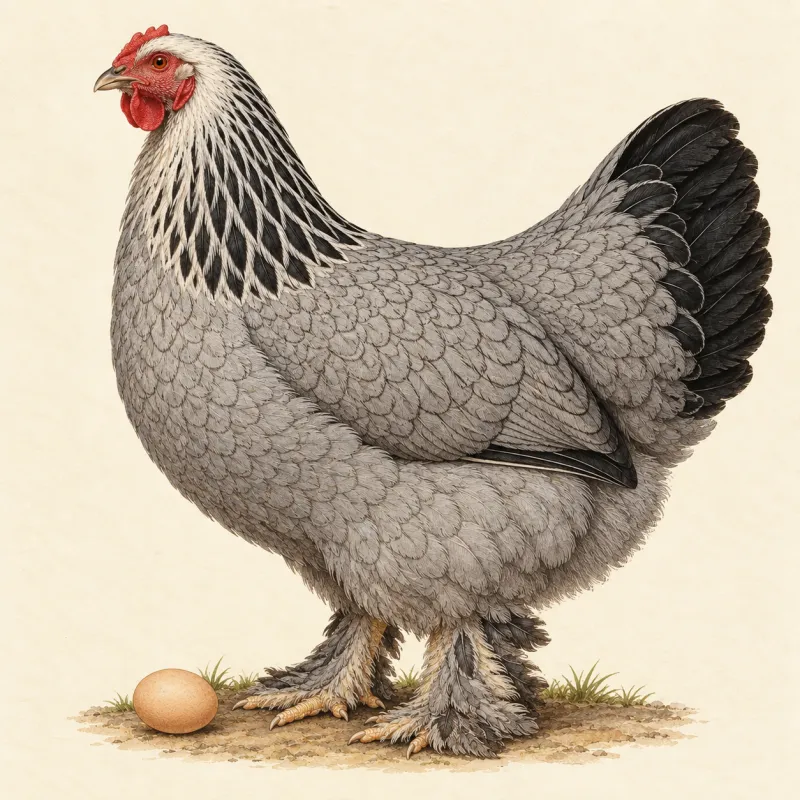
10 Brahma
A feather-footed giant with a pea comb: calm, slow to mature, and a layer of brown eggs through winter.
Item specifics: Brahma
- Egg colour
- Brown
- Eggs a year
- 140-200, mostly October to May
- Days to hatch
- 21
- Size
- Large fowl; males about 5.4 kg (12 lb), hens about 4.5 kg (10 lb)
- From
- United States, from Chinese and Indian stock
- Temperament
- Calm and docile, not flighty
- UK status
- In Britain since 1852, standardised since 1865; not on the RBST watchlist
Why keepers love it: Brahma
Brahmas are among the largest of all chickens: males around 5.4 kg, hens about 4.5 kg, standing up to 30 inches tall. Created in America from big feather-legged birds imported from China and crossed with Grey Chittagongs, the breed reached Britain in 1852, when nine birds were sent to Queen Victoria, and both light and pencilled Brahmas were in the first Book of Standards in 1865. For all the bulk they are calm, docile and not flighty.
Hatching: Brahma
Brahma hens tend to go broody in early summer and sit devotedly, but their weight is a risk: the Livestock Conservancy advises watching the hatchlings so that they are not trampled. The hens lay the bulk of their eggs from October to May, so that is when hatching eggs are most plentiful. Growth is slow and the birds take a long time to reach maturity.
Keeping: Brahma
Feathered shanks and toes are the thing to plan for. Mud clings to the foot feathers and keeps the feet wet, so Brahmas do best on dry, well-drained ground. They are extremely hardy in cold, helped by the pea comb and tight feathering, but need shade and water in heat. Low fences contain them, and they eat a lot. Expect 140 to 200 brown eggs a year.
Checked against: The Poultry Club of Great Britain, The Livestock Conservancy, University of Wisconsin-Madison Division of Extension, Wikipedia, Bund Deutscher Rassegeflügelzüchter (the German poultry federation), University of Illinois Extension, Rare Breeds Survival Trust.
Look for Brahma hatching eggs on Broody Back to the ten chickens
Hatching chicken eggs: the basics
Chicken eggs hatch in 21 days, bantams included. University extension guides run a forced-air incubator at 37.5 to 37.8°C and 50 to 60% relative humidity. Turning stops three days before the hatch, when humidity goes up to 65 to 70%. Expect an egg to lose 12 to 14% of its weight by hatch day.
The breeds differ more in the hen than in the egg. Silkies, Pekins, Orpingtons and Brahmas will sit and rear a clutch themselves. Cream Legbars and Welsummers rarely go broody, so plan on an incubator. For the full routine, see the guide to hatching eggs in an incubator on our sister site.
Questions about chickens
How long do chicken eggs take to hatch?
Chicken eggs take 21 days to hatch, bantams included. University extension guides run a forced-air incubator at 37.5 to 37.8°C and stop turning the eggs three days before the hatch.
Which chicken breeds are good for beginners?
The Rare Breeds Survival Trust calls the Sussex a good choice for a beginner, and Orpingtons one of the best birds for a first-time keeper and for families with children. The Marans Club also describes its birds as suitable for beginners.
Which chickens lay blue eggs?
Of the ten breeds here, the Cream Legbar lays blue eggs, sometimes green or olive depending on the strain. The blue-egg gene is dominant, so crosses with other breeds still lay coloured eggs.
Which chickens lay the darkest brown eggs?
The Marans lays the darkest brown eggs: the French breed club calls its egg the darkest of all hen eggs, a deep red-brown. The Welsummer comes close, with a deep red-brown shell that is often speckled.
Which chicken breeds go broody and hatch their own eggs?
Silkies are the most persistent sitters, and Pekins, Orpingtons, Sussex and Brahmas will all sit and rear a clutch. Cream Legbars and Welsummers rarely go broody, so their eggs need an incubator or a borrowed broody hen.
How we chose these ten
Ten breeds that turn up again and again in UK flocks, set out from the easy-going to the specialist. The choice is ours and nobody has measured it. Every figure was checked against the sources listed with each entry, and where they disagree we give the range. Each plate shows one bird with an egg of the colour the breed lays, even where the bird drawn is the male.
The plates are illustrations, not photographs. We made them with an AI image generator and checked each one against the breed's description, but a drawing is no substitute for seeing the birds, so ask a seller for photos of their own flock.
More from the breed book
Sources
Each entry lists the pages its facts were checked against. For the chapter as a whole: The Poultry Club of Great Britain: Chickens, Rare Breeds Survival Trust: Watchlist, University of Illinois Extension: Incubation and embryology questions and answers, Texas A&M AgriLife Extension: Incubating and hatching eggs (PDF), Mississippi State University Extension: Important incubation factors, University of Wisconsin-Madison Division of Extension: Bantams (North Central Regional Extension Publication 209), The Poultry Club of Great Britain: Incubation.
Spotted something out of date? Email hello@broodyeggs.co.uk.