Top 10 quail to hatch in the UK
Quail are the quickest hatch in the book: about 17 days in the incubator, and hens that can be laying seven weeks later. Most quail kept in the UK are Japanese (Coturnix) quail in different colours, so this chapter sets seven of those beside three other species.
- Pharaoh Coturnix
- Jumbo Coturnix
- Italian Coturnix
- Tuxedo Coturnix
- English White Coturnix
- Texas A&M
- Celadon Coturnix
- Chinese Painted Quail
- Northern Bobwhite
- California Quail
| Quail | What it is | Egg colour | Days to hatch |
|---|---|---|---|
| Pharaoh Coturnix | The wild brown colour | Mottled brown | 17 |
| Jumbo Coturnix | Size strain, about double the weight | Mottled brown | 17 |
| Italian Coturnix | Beige, striated colour | Mottled brown | 17 |
| Tuxedo Coturnix | White and brown; never breeds true | Mottled brown | 17 |
| English White Coturnix | All white; breeds true | Mottled brown | 17 |
| Texas A&M | Heavy white meat strain | Mottled brown | 17 |
| Celadon Coturnix | The blue-egg gene | Blue | 17 |
| Chinese Painted Quail | Separate species, the smallest | Brown to olive, spotted | 16 |
| Northern Bobwhite | Separate species, from North America | Creamy white | 23-24 |
| California Quail | Separate species, plumed | Cream, brown marks | 22-23 |
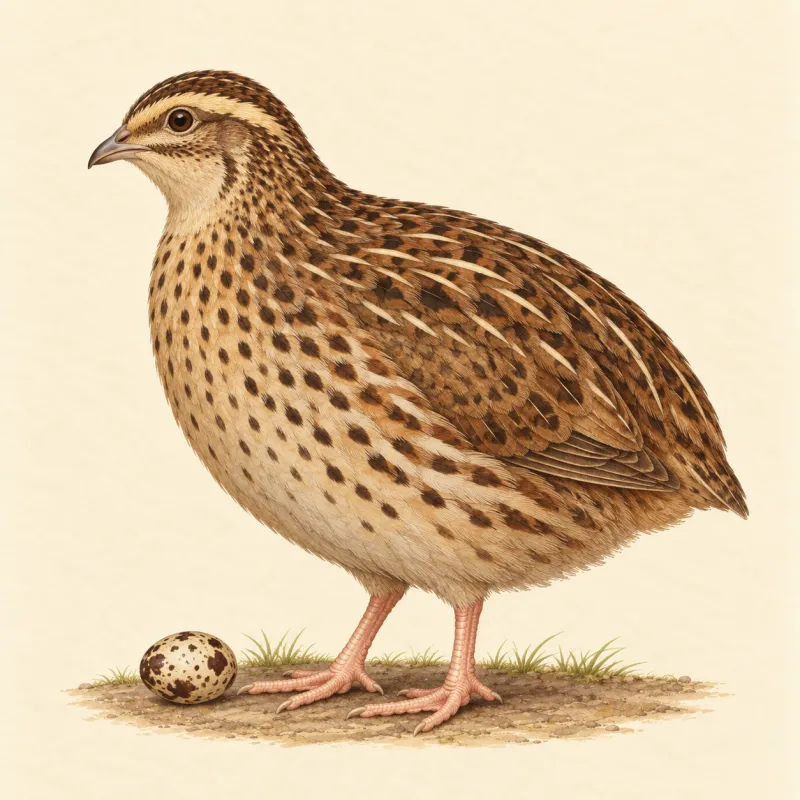
1 Pharaoh Coturnix
The original brown Japanese quail: a 17-day hatch, and hens that can be laying at seven weeks old.
Item specifics: Pharaoh Coturnix
- Egg colour
- Mottled brown; each hen lays her own pattern
- Eggs a year
- 200-300
- Days to hatch
- 17 (sources range from 16.5 to 18)
- Size
- Hens 120-160 g, cocks 100-140 g
- From
- East Asia; domesticated in Japan by most accounts (one paper says China first)
- Temperament
- Sociable ground bird; startles easily and flies straight up
- UK status
- The wild species is Near Threatened (IUCN)
What it is: Pharaoh Coturnix
Pharaoh is the wild brown colour of the Japanese quail, kept in Japan as a songbird for centuries before it was selected for eggs from 1907. It is quick. Birds mature at about six weeks and can lay by seven. The eggs weigh about 10 g, so five equal one hen's egg, and every hen marks her shells with her own pattern. The wild species has declined and is now listed as Near Threatened.
Hatching: Pharaoh Coturnix
Eggs take about 17 days, against 21 for a hen's egg. Mississippi State University sets them at 100°F (37.8°C) in a forced-air incubator and stops turning after day 15. Chicks weigh 6 to 8 g and hatch brownish with yellow stripes. They fit through very small gaps and drown easily in shallow water, so drinkers get a screen or marbles at first. Hens rarely go broody.
Keeping: Pharaoh Coturnix
From three weeks cocks show a rusty breast, hens a speckled one. Layers need 14 to 18 hours of light a day. Home Office standards for laboratory quail favour aviaries or pens over cages, with litter for scratching and dust-bathing, cover, and a pliant roof, because a frightened quail flies straight up. Lives are short, two to four years. Keepers in England and Wales must register their birds.
Checked against: Small and Backyard Poultry (Extension Foundation), Mississippi State University Extension (Important incubation factors, Incubation duration periods), Asia-Pacific Economic Cooperation (APEC), Home Office, GOV.UK, BirdLife International, Wikipedia (Domesticated quail, Japanese quail), Journal of Anatomy (2010), The Poultry Site, RSPCA Research Animals Department, GOV.UK.
Look for Pharaoh Coturnix quail hatching eggs on Broody Back to the ten quail
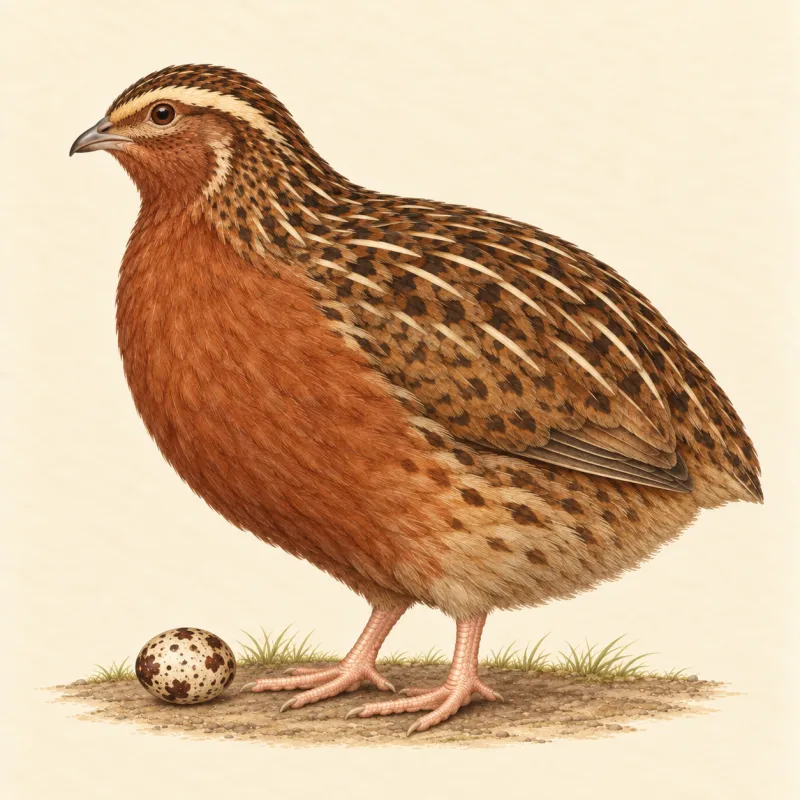
2 Jumbo Coturnix
Japanese quail selected for size: 250 to 300 g, about double a standard bird. In research lines, breeding for weight has cost fertility.
Item specifics: Jumbo Coturnix
- Egg colour
- Mottled brown (normal Coturnix shell)
- Days to hatch
- 17
- Size
- 250-300 g
- From
- Japanese quail selected for size; meat selection is recorded in Europe
What it is: Jumbo Coturnix
Jumbo names a size, not a colour. An ordinary Japanese quail hen weighs 120 to 160 g. Jumbo birds reach 250 to 300 g, the product of selection for rapid growth and feed efficiency. Penn State's advice for the table is plain: the larger Coturnix grow more efficiently and give larger, meatier carcasses. A Texas A&M leaflet adds that the large strains are hardier than bobwhites and reach slaughter weight much earlier. The eggs keep the ordinary speckled shell.
Hatching: Jumbo Coturnix
Incubation is the Coturnix 17 days. Size has a cost in the incubator. In a long-running experiment that bred quail for their weight at four weeks, the heavy lines laid heavier eggs but started later, with lower fertility, hatchability and egg numbers. A companion study put the poorer hatch down to more embryos dying early and late in incubation.
Keeping: Jumbo Coturnix
Care is as for Pharaoh, on litter with cover. For table birds, extension advice is only eight hours of light a day, too little to trigger sexual maturity, so the birds fatten quicker and do not spend energy fighting and mating. We found no UK standard that defines the word Jumbo.
Checked against: Small and Backyard Poultry (Extension Foundation), Penn State Extension, Texas A&M AgriLife Extension, Poultry Science (1996), Poultry Science (1991), Asia-Pacific Economic Cooperation (APEC), British Poultry Science (2026), Mississippi State University Extension, Home Office, GOV.UK.
Look for Jumbo Coturnix quail hatching eggs on Broody Back to the ten quail
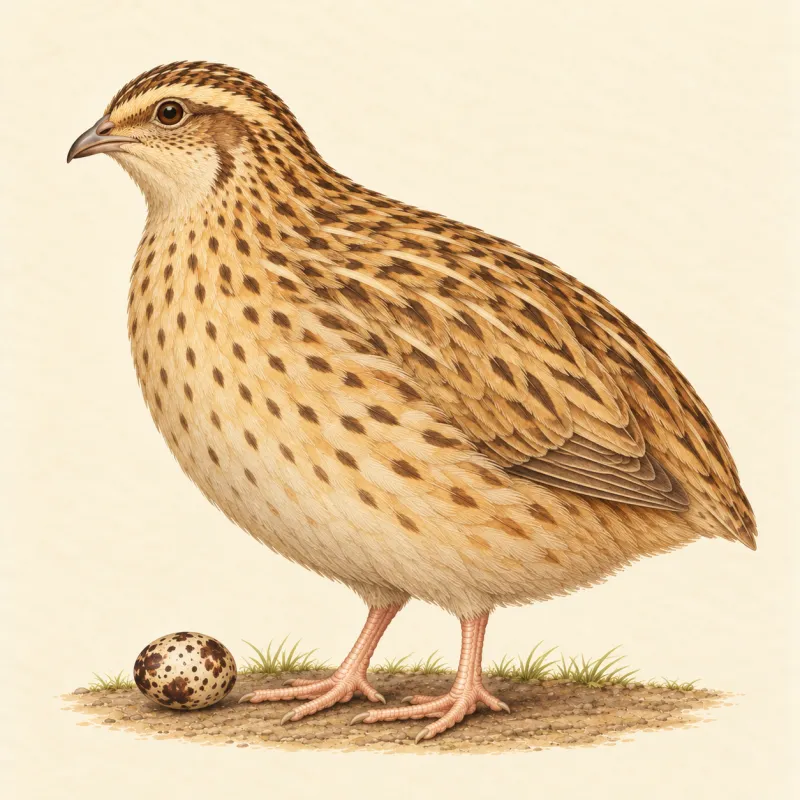
3 Italian Coturnix
A beige Coturnix with striated markings, and a warning from the genetics of pale gold quail: one of the genes involved is lethal in a double dose.
Item specifics: Italian Coturnix
- Egg colour
- Mottled brown (Japanese quail)
- Eggs a year
- 200-300 (Japanese quail generally)
- Days to hatch
- 17
- Size
- Hens 120-160 g, cocks 100-140 g (Japanese quail)
- From
- A named colour of the domestic Japanese quail
What it is: Italian Coturnix
Italian is one of the named colours of Japanese quail, described as beige with striated markings where Pharaoh is brown. We found no published study that says which gene produces it. What geneticists have studied is golden plumage, which they trace to the yellow locus, beside the quail's version of the agouti gene that colours mammals. Two of the mutations recorded there make pale birds. Yellow gives wheat-straw feathers and is dominant. Fawn-2 gives a creamier bird in a double dose and a deeper brown one in a single dose. The name Italian does not say which gene, if either, a flock carries.
Hatching: Italian Coturnix
What a pale gold pair hatches depends on the gene. Yellow is lethal in a double dose: embryos that inherit two copies die, so a yellow pair still hatches wild-type chicks alongside the golden ones. Fawn-2 has no such penalty. Its chicks are creamy yellow all over with three dark stripes down the back, and double-dose birds are fully viable. Incubation is 17 days.
Keeping: Italian Coturnix
Care is as for Pharaoh. In a study of the yellow gene, golden birds grew more slowly at first but matched their wild-type siblings by five weeks, ate the same, carried about a quarter more abdominal fat and adapted less easily to individual cages. In fawn-2 birds the sexes still differ: cocks have a rusty face and hens are creamier with more black speckles.
Checked against: Journal of Heredity (1979), Genetics (2008), Journal of Heredity (1996), Poultry Science (2007), Wikipedia (Domesticated quail, Japanese quail), Small and Backyard Poultry (Extension Foundation), The Poultry Site, Asia-Pacific Economic Cooperation (APEC), Mississippi State University Extension, Journal of Poultry Science (2008).
Look for Italian Coturnix quail hatching eggs on Broody Back to the ten quail
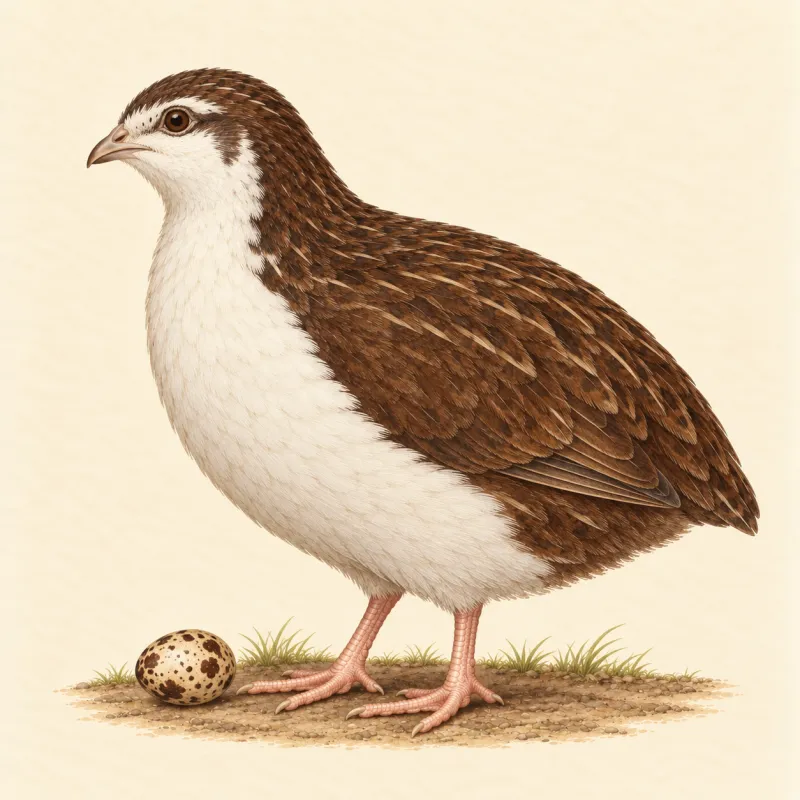
4 Tuxedo Coturnix
A white and brown Coturnix built from two genes, so it never breeds true and hatches three colours.
Item specifics: Tuxedo Coturnix
- Egg colour
- Mottled brown (Japanese quail)
- Eggs a year
- 200-300 (Japanese quail generally)
- Days to hatch
- 17
- Size
- Hens 120-160 g, cocks 100-140 g (Japanese quail)
- From
- Two-gene pattern of the Japanese quail (Somes, 1979)
What it is: Tuxedo Coturnix
Tuxedo is the white and brown Coturnix, and it is a recipe more than a colour. A 1979 study by Somes showed that a Tuxedo carries a double dose of extended brown, the gene behind the dark British Range quail, together with a single dose of the recessive white gene of the English White. Lose the white gene or double it and the pattern is gone, so a Tuxedo cannot breed true.
Hatching: Tuxedo Coturnix
By Somes's genetics, two Tuxedos should hatch about a quarter white chicks, half Tuxedo and a quarter dark brown, and an English White mated to a British Range bird that carries two copies of extended brown should give all Tuxedos. A bird with one dose of each gene shows a different, shafted, tuxedo-like pattern. Incubation is the usual 17 days.
Keeping: Tuxedo Coturnix
Tuxedo is one of the colours that cannot be sexed by plumage. A mature cock is told by his cloacal gland, a bulbous swelling at the upper edge of the vent that gives a white foam. Care is otherwise that of any Japanese quail: 14 to 18 hours of light for layers, litter to scratch in, cover, and a pliant roof.
Checked against: Journal of Heredity (1979), Small and Backyard Poultry (Extension Foundation), Home Office, GOV.UK, Wikipedia (Japanese quail, Domesticated quail), The Poultry Site, Asia-Pacific Economic Cooperation (APEC), Mississippi State University Extension.
Look for Tuxedo Coturnix quail hatching eggs on Broody Back to the ten quail
5 English White Coturnix
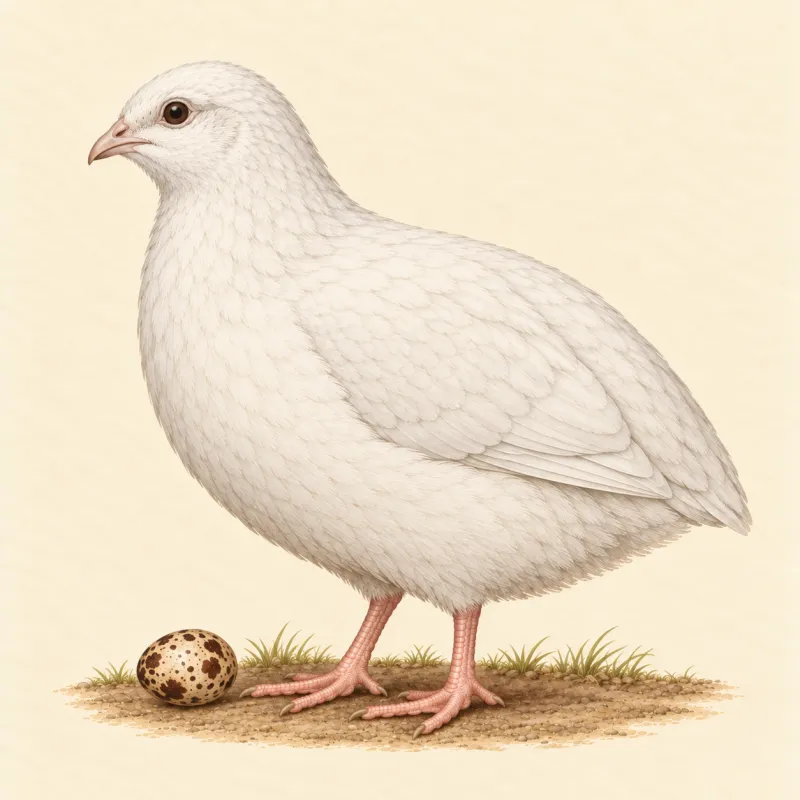
The all-white Coturnix: a recessive colour that breeds true and can hide a dark bird underneath.
Item specifics: English White Coturnix
- Egg colour
- Mottled brown (Japanese quail)
- Eggs a year
- 200-300 (Japanese quail generally)
- Days to hatch
- 17
- Size
- Hens 120-160 g, cocks 100-140 g (Japanese quail)
- From
- Recessive white of the Japanese quail (Somes, 1979)
What it is: English White Coturnix
English White is the all-white Japanese quail, white in cocks and hens alike. The colour comes from a recessive gene that gives an all-white bird and masks extended brown. Somes found that his English Whites were hiding a double dose of extended brown, which makes white birds the other half of the Tuxedo recipe. One trial found white-feathered quail heavier and more productive than brown ones, though the same paper cites earlier work linking recessive white to lower body weight.
Hatching: English White Coturnix
Because the gene is recessive, two English Whites give only white chicks. Not every white Coturnix is this gene. A second white, dotted white, is also recessive. Its chicks have small light brown spots on the head or back, and about one in eight has no spot at all. Incubation is 17 days, as for any Japanese quail.
Keeping: English White Coturnix
White birds cannot be sexed by breast colour, so cocks are picked out at maturity by the cloacal gland above the vent and its white foam. Housing and lighting are those of any Japanese quail. The Home Office standards described under Pharaoh keep about one cock to four hens in mixed groups, to limit fighting between cocks and injuries to hens.
Checked against: Journal of Heredity (1979), Journal of Heredity (1993), Journal of Poultry Science (2008), Tropical Animal Health and Production (2023), Home Office, GOV.UK, Wikipedia (Domesticated quail, Japanese quail), Small and Backyard Poultry (Extension Foundation), The Poultry Site, Asia-Pacific Economic Cooperation (APEC), Mississippi State University Extension.
Look for English White Coturnix quail hatching eggs on Broody Back to the ten quail
6 Texas A&M
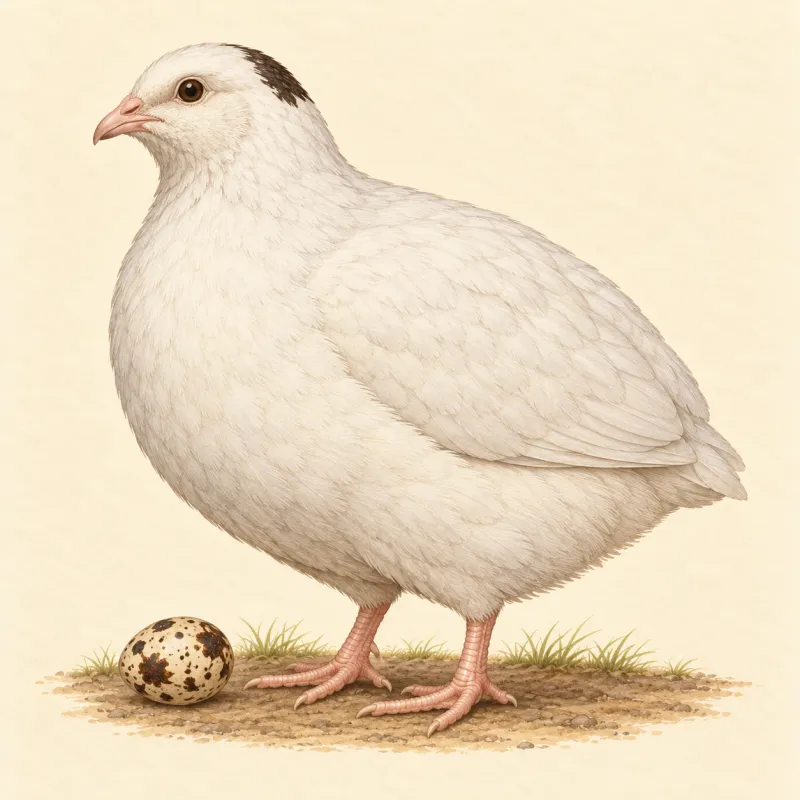
A heavy, white-feathered meat strain of Coturnix developed at Texas A&M University in the United States.
Item specifics: Texas A&M
- Egg colour
- Mottled brown (normal Coturnix shell)
- Days to hatch
- 17
- Size
- 10-13 oz (about 280-370 g) live weight at seven weeks
- From
- Texas A&M University, United States
What it is: Texas A&M
Texas A&M is the heavy white table quail. The university's own extension leaflet, written by poultry specialist Fred Thornberry, describes a heavily muscled, light-fleshed Coturnix strain that reaches 10 to 13 ounces, about 280 to 370 g, at seven weeks. Thornberry is credited with developing the line, and the white strain bred there is known as A&M quail. White feathers and light skin give the flesh a uniform, light colour. Smaller strains, the leaflet says, give small, dark-fleshed carcasses.
Hatching: Texas A&M
The eggs are speckled like any Coturnix egg, not white, and take 17 days. Storage is hard on them: in a 2026 study, eggs from Texas quail had the most porous shells and lost the most weight in 28 days of cold storage. The chicks start big and stay big: in a genetics study, day-old Texas Whites averaged 9.3 g against 8.5 g for a Japanese breed, and 301 g against 206 g at seven weeks.
Keeping: Texas A&M
The birds are white, often with a small patch of brown feathers above the eyes, and cannot be sexed by plumage. The leaflet warns that quail peck and cannibalise each other, and counters it with low-intensity or red light, more floor space and better ventilation. Pebbles go in the drinkers for the first seven days to stop chicks drowning. Commercial flocks harvest at seven or eight weeks.
Checked against: Texas A&M AgriLife Extension, International Journal of Molecular Sciences (2025), British Poultry Science (2026), Austin American-Statesman, Wikipedia, Small and Backyard Poultry (Extension Foundation), Mississippi State University Extension.
Look for Texas A&M quail hatching eggs on Broody Back to the ten quail
7 Celadon Coturnix
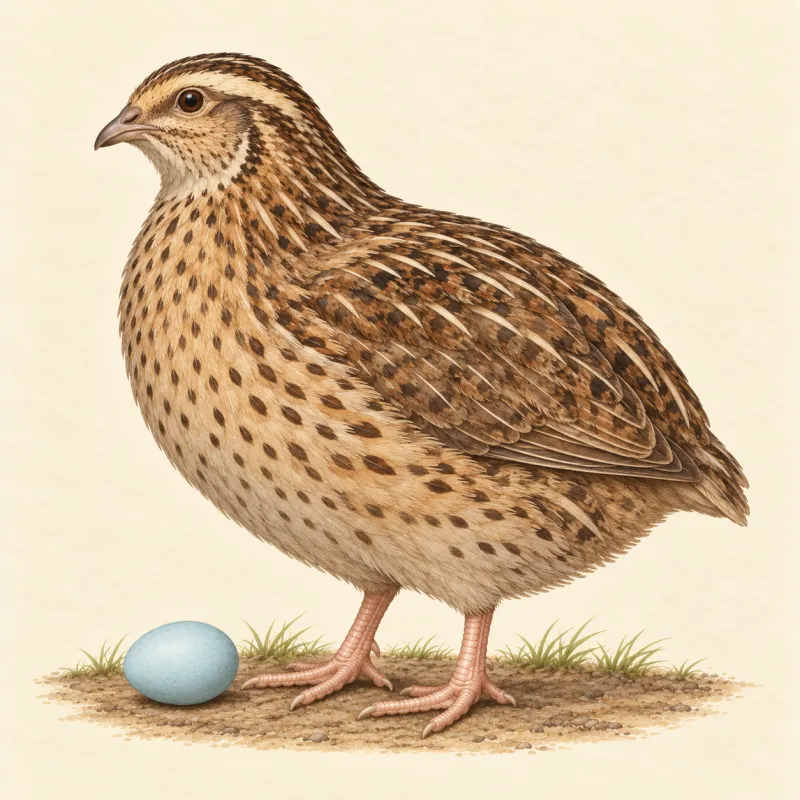
The blue-egg gene of the Japanese quail: recessive, invisible in the bird, obvious in the nest.
Item specifics: Celadon Coturnix
- Egg colour
- Blue-tinted, a uniform shell in shades of blue
- Eggs a year
- 200-300 (Japanese quail generally)
- Days to hatch
- 17
- Size
- Hens 120-160 g, cocks 100-140 g (Japanese quail)
- From
- Eggshell mutation of the Japanese quail, described in 1993
What it is: Celadon Coturnix
Celadon is a gene for the eggshell, not the feathers. It was described in 1993 and named for the look of Song dynasty porcelain. A hen with two copies lays blue-tinted eggs, because the brown pigment of an ordinary shell falls far below normal while 44% of the blue-green pigment remains. A hen that also has two copies of the separate white-shell gene lays a pure white egg.
Hatching: Celadon Coturnix
The gene is recessive, so a blue-egg hen needs a copy from each parent, and a hen with one copy lays ordinary speckled eggs. One trial found that blue-shelled quail eggs hatched worse than brown-spotted ones, 69% of eggs set against 84%, with weaker shells and lighter chicks. A 2026 study of celadon eggs found shell strength no different from normally pigmented eggs. Incubation is 17 days.
Keeping: Celadon Coturnix
Celadon is not a plumage colour, and the birds are kept like any other Japanese quail. A cock lays no eggs, so nothing shows whether he carries the gene. It helps that each hen lays eggs with her own characteristic shell pattern or colour, which lets a keeper match eggs to hens. In the 2026 study, stored celadon eggs kept as well as the others.
Checked against: Journal of Heredity (1993), Journal of Poultry Science (2008), Asia-Pacific Economic Cooperation (APEC), Animals (2020), British Poultry Science (2026), Wikipedia, The Poultry Site, Mississippi State University Extension, Small and Backyard Poultry (Extension Foundation), Home Office, GOV.UK.
Look for Celadon Coturnix quail hatching eggs on Broody Back to the ten quail
8 Chinese Painted Quail
The smallest of all gamebirds: bumblebee-sized chicks in about 16 days. No relation of the buttonquails.
Item specifics: Chinese Painted Quail
- Egg colour
- Pale brown to olive, with dark spots
- Eggs a year
- About 250 in laboratory flocks
- Days to hatch
- 16 (sources range from 16 to 19)
- Size
- 12.5-14 cm long; captive cocks 45-48 g, hens 56-64 g
- From
- India, south-east Asia and south-eastern China; also native to Australia
- Temperament
- Strongly pair-bonded; cocks fight each other
- UK status
- Common in aviculture worldwide; Least Concern in the wild (IUCN)
What it is: Chinese Painted Quail
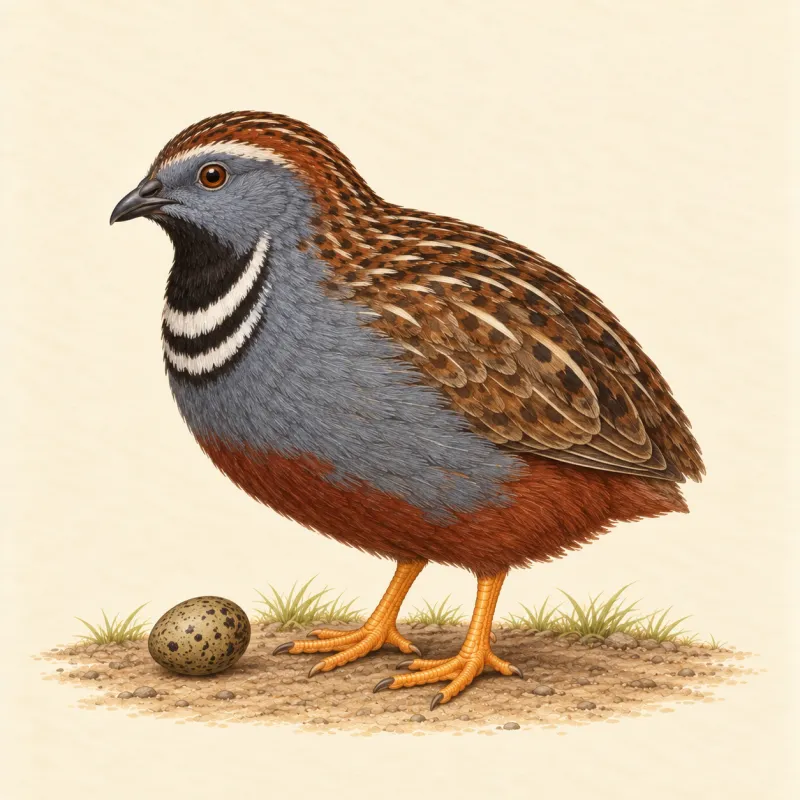
Often called the button or king quail, this is the smallest bird in the order Galliformes, about half the body size of a Japanese quail. The wild cock has a slate blue-grey breast, a chestnut-red belly and a black throat patch ringed with white. It is not closely related to the true buttonquails. It moves about mostly on the ground and seldom flies, and many colour forms have been bred in captivity, silver the best known.
Hatching: Chinese Painted Quail
Eggs weigh about 5 g and hatch after about 16 days at 37.7°C, though other sources give up to 19. New chicks weigh about 4 g and are the size of bumblebees, brown in the wild colour and yellow from white parents. Only the hen incubates. Sexual maturity is put at anything from one month to eight or nine weeks.
Keeping: Chinese Painted Quail
This is a bird for pairs: it is strongly monogamous, and cocks are aggressive to each other at close quarters. It likes warmth. Its thermal neutral zone is 28 to 35°C, well above the 15 to 25°C the Home Office standards set for quail housing, and outdoor aviaries need shelter and a heat source for every bird. Laying hens need extra calcium such as ground oyster shell.
Checked against: BirdLife International, Animal Diversity Web, University of Michigan Museum of Zoology, Animal Science Journal (2019), Journal of Poultry Research, DergiPark, Poultry Science (1994), Wikipedia, PLOS ONE (2016), Home Office, GOV.UK.
Look for Chinese Painted Quail hatching eggs on Broody Back to the ten quail
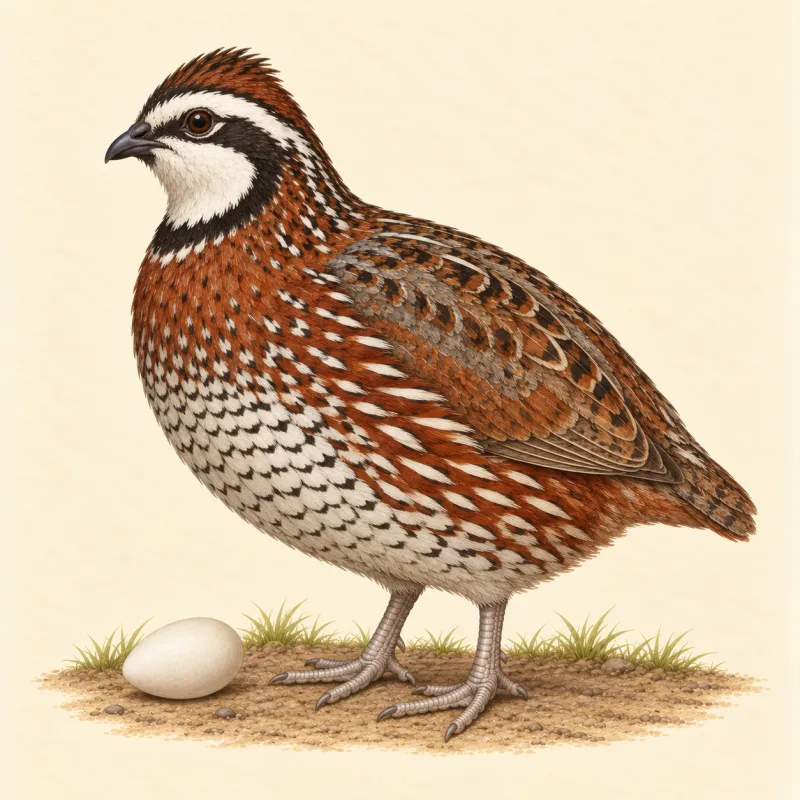
9 Northern Bobwhite
The whistling American covey quail: white eggs, a 23 to 24 day hatch, and a bird that needs flying room.
Item specifics: Northern Bobwhite
- Egg colour
- Dull or creamy white
- Eggs a year
- 50-100 in a natural season; 70-150 with a 17-hour day
- Days to hatch
- 23-24 (sources range from 22 to 24)
- Size
- 140-170 g
- From
- Eastern North America, from southern Canada to Mexico and Guatemala
- Temperament
- Covey bird; flushes straight up when alarmed; cocks fight in the breeding season
- UK status
- Non-native; Near Threatened in the wild (IUCN)
What it is: Northern Bobwhite
The bobwhite is named for its call, two sharp whistled notes that carry a long distance. It is a New World quail, a separate family from Coturnix, and one of the most intensively studied birds in the world. Coveys roost on the ground in a tight circle, tails in and heads out. In North America numbers fell by about 81% between 1966 and 2019, and the species is listed as Near Threatened.
Hatching: Northern Bobwhite
Eggs are dull or creamy white and take 23 to 24 days, about a week longer than Coturnix. Mississippi State University sets them at 100°F (37.8°C), forced-air, and stops turning around day 19 or 20. Chicks hatch downy and active and can feed themselves, though they rely on their parents for warmth and for finding food. This is a slower bird: it counts as mature at 16 weeks, and a hen lays 50 to 100 eggs in a natural season.
Keeping: Northern Bobwhite
Bobwhites get more room than Coturnix: Penn State allows two square feet a bird in flight pens, where commercial guidance gives a Coturnix 145 cm². Mississippi State covers pens with soft mesh because birds scalp themselves flying up, and calls cannibalism a major problem. The Wildlife and Countryside Act makes it an offence to let an animal not ordinarily resident in Great Britain escape into the wild.
Checked against: BirdLife International (Northern Bobwhite Colinus virginianus Species Factsheet, Japanese Quail Coturnix japonica Species Factsheet), Mississippi State University, Department of Poultry Science, Penn State Extension, All About Birds, Cornell Lab of Ornithology (Northern Bobwhite Life History, Northern Bobwhite), legislation.gov.uk, National Audubon Society, Mississippi State University Extension, Texas A&M AgriLife Extension, The Poultry Site, Animal Diversity Web, University of Michigan Museum of Zoology, RSPCA Research Animals Department.
Look for Bobwhite Quail hatching eggs on Broody Back to the ten quail
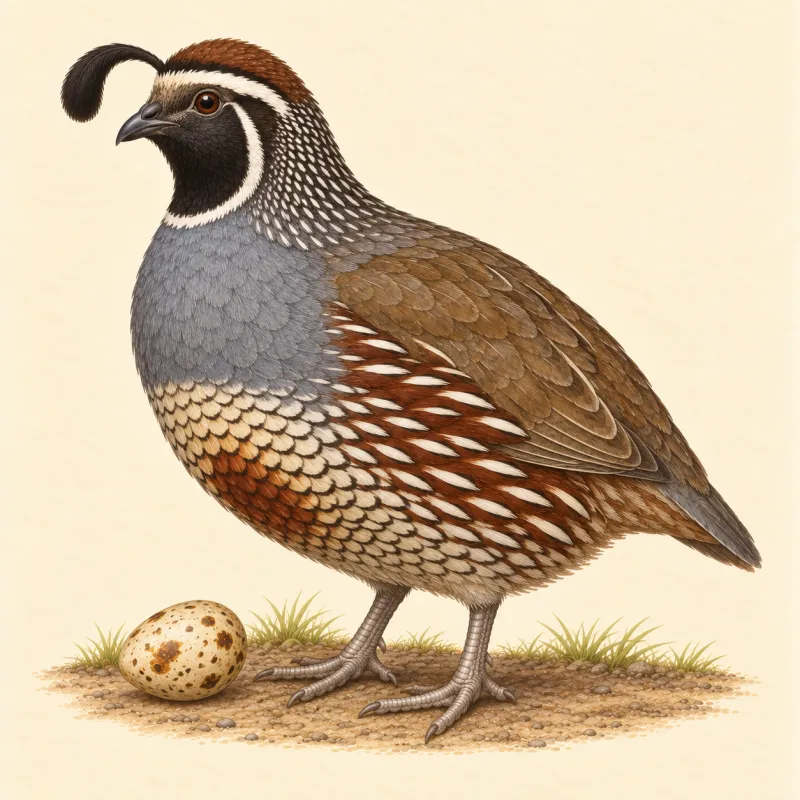
10 California Quail
A plumed covey quail of the American west: 12 to 16 marked eggs, a 22 to 23 day hatch, an aviary bird.
Item specifics: California Quail
- Egg colour
- White to creamy with brown markings
- Eggs a year
- 12-16 a clutch, 1-2 broods a year in the wild; no captive figure found
- Days to hatch
- 22-23 (one source gives about 18-23)
- Size
- About 150-190 g
- From
- Western North America: native to Canada, the United States and Mexico
- Temperament
- Covey bird; runs first, then bursts into flight; roosts in trees
- UK status
- Non-native; Least Concern in the wild (IUCN)
What it is: California Quail
The California quail wears a forward-drooping topknot that looks like one feather but is a cluster of six. Below it are a rich grey breast and intricately scaled underparts. It is the state bird of California, calls Chi-ca-go, and in autumn and winter gathers in coveys that can pass 75 birds. Unlike Coturnix it roosts in trees. Wild numbers are increasing and it is listed as Least Concern.
Hatching: California Quail
A clutch is usually 12 to 16 eggs, white to creamy with brown markings, and takes 22 to 23 days, though one field guide gives about 18 to 23. Chicks hatch covered in brownish down and can walk, follow and peck at once, and fly short distances at ten days. They pick up the gut protozoa that help digest vegetation by pecking at adults' droppings.
Keeping: California Quail
This is an aviary bird. It moves fast on short legs, bursts into whirring flight when pressed and roosts in trees. The Home Office standards name this species too, and recommend aviaries or pens with cover and a pliant roof. Breeding is seasonal: wild hens lay between May and June. Letting a non-native animal escape into the wild is an offence under the Wildlife and Countryside Act.
Checked against: BirdLife International, All About Birds, Cornell Lab of Ornithology (California Quail Life History, California Quail), Animal Diversity Web, University of Michigan Museum of Zoology, National Audubon Society, Home Office, GOV.UK, Wikipedia, legislation.gov.uk.
Look for California Quail hatching eggs on Broody Back to the ten quail
Hatching quail eggs: the basics
Japanese (Coturnix) quail eggs hatch in about 17 days; sources range from 16.5 to 18. Mississippi State University gives 100°F (37.8°C) and a wet-bulb reading of 85 to 86°F in a forced-air incubator, with turning stopped after day 15. The other quail here are separate species with their own timings: Chinese painted quail about 16 days, bobwhite 23 to 24, California quail 22 to 23.
Coturnix chicks weigh 6 to 8 g at hatch and tend to drown in shallow water, so put a screen or marbles in the drinker for the first week or two.
Questions about quail
How long do quail eggs take to hatch?
Japanese (Coturnix) quail eggs hatch in about 17 days. Chinese painted quail take about 16, California quail 22 to 23 and bobwhite 23 to 24.
How soon do quail start laying?
Japanese quail mature at about six weeks and can lay by seven.
What colour are quail eggs?
Coturnix eggs are mottled brown, and every hen marks her shells with her own pattern. Hens with two copies of the celadon gene lay blue-tinted eggs. Bobwhite eggs are dull or creamy white.
Can you tell male and female quail apart?
Male and female quail can be told apart in the wild brown Pharaoh colour from about three weeks: cocks show a rusty breast and hens a speckled one. White and Tuxedo birds cannot be sexed by plumage, so cocks are picked out at maturity by the cloacal gland above the vent.
Do you have to register quail in the UK?
Yes. Keepers of quail in England and Wales must register their birds, however few they keep. It is also an offence to let non-native quail such as bobwhites escape into the wild.
How we chose these ten
Seven of the ten are colours and strains of one bird, the Japanese (Coturnix) quail. The other three are separate species. The choice is ours and nobody has measured it. Every figure was checked against the sources listed with each entry, and where they disagree we give the range. Each plate shows one bird with an egg of the colour the breed lays, even where the bird drawn is the male.
The plates are illustrations, not photographs. We made them with an AI image generator and checked each one against the breed's description, but a drawing is no substitute for seeing the birds, so ask a seller for photos of their own flock.
More from the breed book
Sources
Each entry lists the pages its facts were checked against. For the chapter as a whole: Mississippi State University Extension: Important incubation factors, Mississippi State University Extension: Incubation duration periods, All About Birds, Cornell Lab of Ornithology: California Quail life history, Journal of Anatomy (2010): Developmental stages of the Japanese quail, The Poultry Site: Raising Japanese Quail, Animal Science Journal (2019): Developmental stages of the blue-breasted quail (Coturnix chinensis) (Nakamura and others, Animal Science Journal 2019), GOV.UK: Register as a keeper of less than 50 poultry or other captive birds.
Spotted something out of date? Email hello@broodyeggs.co.uk.